
NOTES FROM THE LECTURE:
“The Reformed view of election, known as unconditional election, means that God does not foresee an action or condition on our part that induces Him to save us. Rather, election rests on God’s sovereign decision to save whomever He is pleased to save.” — R.C. Sproul
Dr. R.C. Sproul once told a story about being invited to teach theology at a university. He was brought in specifically to teach the Doctrines of Grace. In his very first class, he began where many of us would begin, with the doctrine of total depravity. After presenting the biblical case, he asked the students a simple question. “Do you agree that the Bible teaches this doctrine?” Every student in the room said yes.
Sproul then asked each student to come to the chalkboard and write their name, publicly affirming that they believed the doctrine of total depravity. Once they had done so, he told them, “I want to hold you to this. You have said that you believe in total depravity.”
When the class moved on to the next doctrine, unconditional election, the objections began immediately. The students resisted the teaching, pushed back against the implications, and challenged the conclusions. One by one, they went back to the board and erased their names. They realized that if they rejected unconditional election, they could not consistently affirm total depravity.
That story illustrates something important. When it comes to the Doctrines of Grace, they are not a loose collection of ideas. They are connected. They build on one another. While some people try to remove one doctrine and keep the rest, the system as a whole is cohesive. There are those who call themselves four point Calvinists, often referred to as Amyraldians, and that discussion typically centers on limited atonement. We will address that later. But apart from that particular debate, these doctrines stand or fall together.
Unconditional election is not an isolated idea. It is the necessary consequence of total inability. If human beings are dead in sin, unable to respond to God apart from divine intervention, then salvation must begin with God. And if God must act first, then that action cannot be conditioned on anything in us. God’s choice must be rooted in his own will, not in foreseen merit, faith, or decision.
In our political system, the idea of election is familiar. To elect means to choose. An elective procedure is one that is chosen rather than required. The word itself carries the idea of a deliberate decision. Scripture uses this same language to describe God’s people. They are repeatedly called the elect, the chosen, those set apart by God.
Once we acknowledge that Scripture uses this language, questions naturally follow. How were they chosen? When were they chosen? On what basis were they chosen? The answers to those questions divide Christian theology into two primary categories. Either election is conditional, meaning God chose individuals based on some condition they fulfilled, or it is unconditional, meaning God chose individuals apart from any condition they met.
The most common condition proposed is faith. In conditional election, God elects those whom he foresees will believe. God chooses you because you chose him. While that may not always be stated so plainly, that is the underlying idea. God’s election is a response to human decision.
A related view is known as corporate election. In this model, God elects a group rather than individuals. Christ is the chosen one, and individuals become elect by choosing to be in him. A common illustration is that of a ship bound for a destination. The destination is fixed, and all who are on the ship will arrive. But individuals must choose to board the ship. In this analogy, Christ is the ship. Election applies to the group, not the individuals until they choose to join it.
While this view differs in form, it still rests on the same principle. Entry into the elect depends on human choice. Whether the condition is faith, decision, or choosing to be in Christ, election remains conditional.
Unconditional election, by contrast, teaches that God’s choice is independent of human action. God does not elect because of something he sees in us. He elects according to his own will and purpose. That is the position affirmed here.
Many people think their objection to Calvinism centers on limited atonement. In reality, the deeper objection is usually unconditional election. People resist the idea that God makes a choice apart from them. They object to a God who chooses without the participation of the human will.
Ephesians 1 addresses this directly. Paul begins by blessing God for the spiritual blessings believers have received in Christ. He identifies his audience clearly. These blessings belong to those who are in Christ. He then says that God chose us in him before the foundation of the world, that we should be holy and blameless before him.
This is where the debate often centers. Those who hold to corporate or conditional election emphasize the phrase “in him.” They argue that God chose Christ as the elect one, and individuals become elect by entering into Christ. The focus, they say, is on the location of election rather than the objects of election.
From the Reformed perspective, the emphasis falls on the word “us.” God chose us in him. The choosing is personal and specific. The phrase “in him” tells us the sphere or means of election, not the basis of it.
Paul also tells us when this choice was made. It was before the foundation of the world. That means before creation, before human existence, before any action or decision could be made. God’s choice preceded all human activity.
Paul goes on to say that God predestined us for adoption according to the good pleasure of his will. Again, the focus is entirely on God’s action and God’s purpose. This is not a cooperative effort between God and man. It is God acting according to his will.
This raises a common objection. If God chooses some, does that mean he actively condemns others? Scripture makes an important distinction here. God actively elects the saved. The lost are passed over, not actively forced into unbelief. All people are already sinners deserving judgment. God does not need to create evil in their hearts.
This distinction guards against the idea of equal ultimacy, the notion that God works evil in the same way he works good. Scripture does not teach that. God shows mercy to some and leaves others in their sin.
Those who are punished receive justice. Those who are saved receive mercy. No one receives injustice.
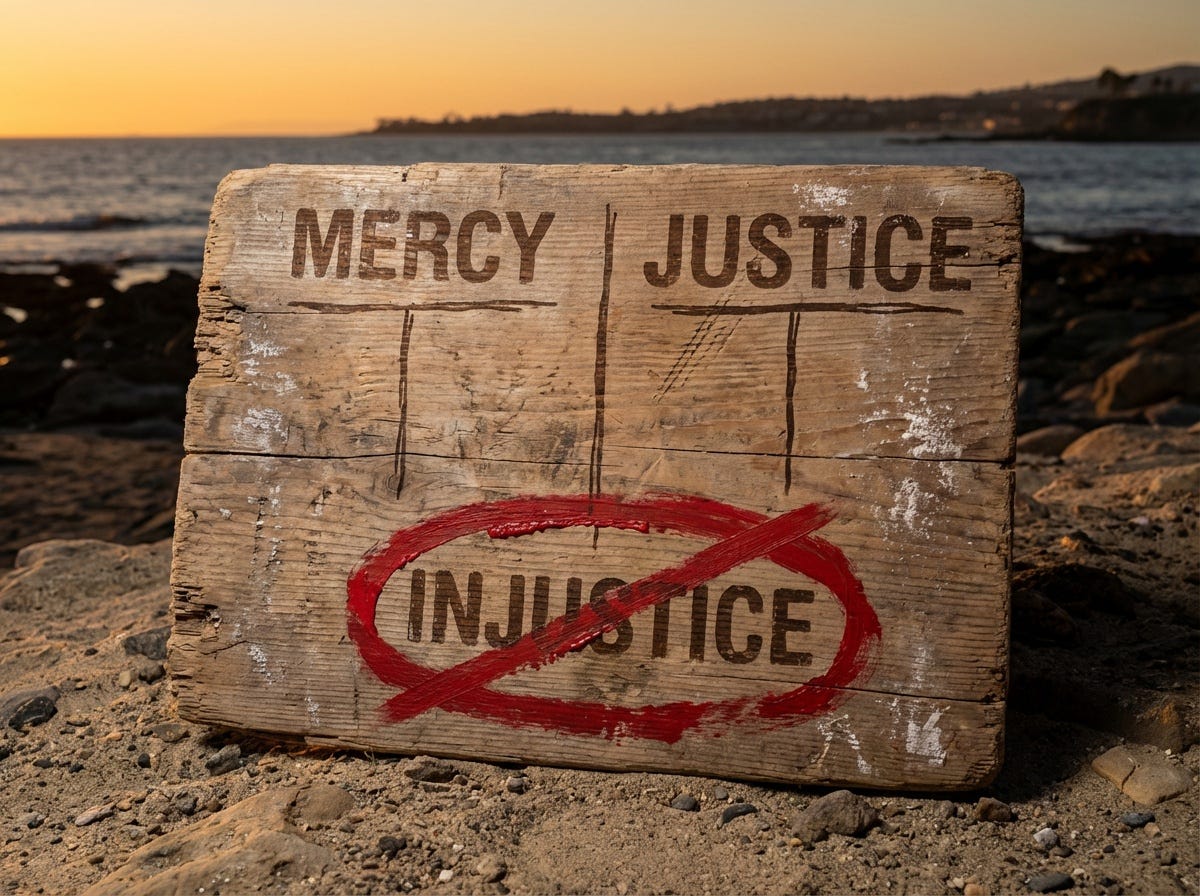
God was not obligated to save anyone. He could have chosen to save no one and would have remained perfectly just. He could have chosen to save everyone. The fact that he saves some does not make him unjust. It displays both his justice and his mercy.
This reality confronts every theological system. Not everyone will be saved. Even in Arminian theology, God saves only those who believe. The difference lies in why some believe and others do not.
Romans 8 brings further clarity. Paul promises that God causes all things to work together for the good of those who love him and are called according to his purpose. This promise is not universal. It applies specifically to those who are called.
Paul explains why in the verses that follow. Those whom God foreknew, he also predestined to be conformed to the image of his Son. This is where the prescient view enters the discussion. Some argue that foreknowledge means God looked into the future, saw who would believe, and then predestined them.
However, Scripture uses the concept of knowing in a relational and covenantal sense. When God says to Israel, “You only have I known,” he is not saying he lacked information about other nations. He is saying he chose them and set his love upon them.
The Greek word translated foreknew carries this idea. It refers not merely to awareness but to relational choice. To foreknow is to set one’s affection upon beforehand.
Nelson’s Bible Dictionary – FOREKNOWLEDGE – the unique knowledge of God that enables Him to know all events, including the free acts of people, before they happen. God’s foreknowledge is much more than foresight. God does not know future events and human actions because He foresees them; He knows them because He wills them to happen (Job 14:5; Ps. 139:15-16). Thus God’s foreknowledge is an act of His will (Is. 41:4; Rev. 1:8, 17; 21:6). In Romans 8:29 and 11:2, the apostle Paul’s use of the word “foreknew” means “chose” or “to set special affection on.” The electing love of God, not foresight of human action, is the basis of His predestination and salvation (Rom. 8:29-30, 33). This same idea is used to express the nation of Israel’s special relationship to God (Acts 2:23; Rom. 11:2; 1 Pet. 1:2, 20).
Romans 8 confirms this understanding through what follows. Those whom God predestined, he also called. This calling is effectual. It brings people to faith. God does not call everyone in this sense. Those he calls, he justifies. Those he justifies, he glorifies.
This sequence is often called the golden chain of redemption. God is the actor at every stage. The verbs all belong to him. There is no reference to human merit or foreseen action.
Romans 9 reinforces God’s freedom in showing mercy. Paul appeals to God’s dealings with Moses and Pharaoh. God showed mercy to Moses and hardened Pharaoh. He did so according to his own purpose.
Foreknowledge, then, is not passive observation. It is determinative. God does not merely foresee faith. He enables us to believe.
Believer’s Bible Commentary – Some have tried to reconcile sovereign election and human responsibility by saying that God foreknew who would trust the Savior and that those are the ones whom He elected to be saved. They base this on Romans 8:29 (“whom He foreknew He also predestined”) and 1 Peter 1:2 (“elect according to the foreknowledge of God”). But this overlooks the fact that God’s foreknowledge is determinative. It is not just that He knows in advance who will trust the Savior, but that He predetermines this result by drawing certain individuals to Himself.
The Bible repeatedly uses the language of election. Believers are called chosen, elect, set apart. This brings us back to total depravity. If humans are dead in sin and unable to respond to God apart from divine intervention, then election must be unconditional. God must act first.
“This understanding of election has traditionally been called “unconditional election.” It is “unconditional” because it is not conditioned upon anything that God sees in us that makes us worthy of his choosing us.” — Wayne Grudem

Sovereign Grace Academy is a biblical studies ministry provided by Sovereign Grace Family Church. Students of the ministry will be provided seminary quality instruction with no financial obligation. Courses are provided in a wide range of subjects.